HR Insight: Can Employer Reduce Employee Salary Without Consent in India
Understanding how to Reduce Salary Without Consent in India is crucial for both employers and employees.
Situation
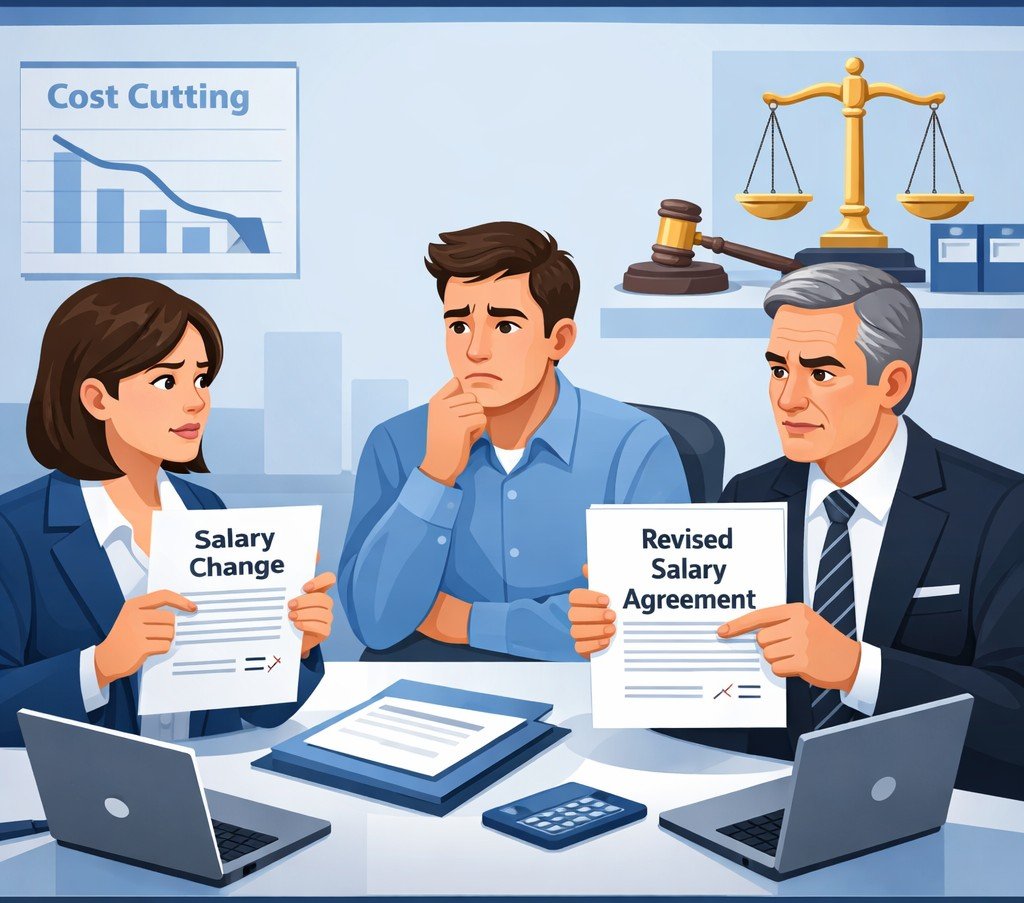
An organisation faces financial pressure and decides to reduce employee salaries. HR receives instructions to implement salary cuts immediately. Employees are informed through email without prior discussion. Some employees accept silently, while others question legality and fairness. Tension rises across teams, affecting morale, trust, and overall workplace stability.
HR Insight
Salary is not just a number; it is part of the employment contract agreed between employer and employee. Any reduction without employee consent can be viewed as a unilateral change in service conditions. In India, such actions may lead to disputes, loss of trust, and even legal challenges. While business situations may demand cost control, forced salary cuts damage long-term employee engagement. The correct HR approach is to communicate transparently, explain business reasons, and seek employee agreement before implementing any reduction.
Practical HR Takeaway
✔ Seek employee consent before salary revision
Salary changes must be mutually agreed. Written consent protects both employer and employee from future disputes.
✔ Communicate business reasons clearly
Explain financial challenges honestly. Transparency builds trust and increases employee willingness to cooperate.
✔ Explore alternatives before reduction
Consider cost-saving options like variable pay adjustments, unpaid leave, or temporary restructuring before reducing fixed salary.
✔ Ensure fairness and consistency
Apply changes uniformly across similar roles. Selective reduction creates dissatisfaction and perception of bias.
✔ Document all salary changes properly
A salary revision — even upward — must be supported by a revised letter acknowledged by the employee. Compensation restructuring should be done through formal written agreement, not email or verbal instruction.
✔ Maintain proper documentation trail
Courts in India give strong importance to documentation. Keep records of approvals, consent, and communication to avoid legal risk.
✔ Limit reduction to temporary period
Clearly define duration and review timeline. Employees accept temporary measures more than indefinite changes.
✔ Involve leadership in communication
Top management visibility builds confidence. Employees trust decisions when leaders communicate directly.
Legal Angle
Under Indian labour laws, salary is a contractual obligation and cannot be reduced unilaterally. The Minimum Wages Act, 1948 ensures wages cannot fall below prescribed limits. Under the Code on Wages, 2019, wage changes must comply with statutory provisions and require employee consent. Total authorized deductions cannot exceed 50% (or 75% in specific cases). Additionally, if the employee qualifies as a ‘workman’ under the Industrial Disputes Act, 1947, a Section 9A notice is mandatory before changing service conditions. In unionized setups, consultation with the recognized trade union is required.
Read: The Salary Negotiation Mistakes
Recent Article
📘 Recover Training Cost from Employee in India – Legal & HR Guide
👉 https://karnatakahrhub.com/recover-training-cost-from-employee-india/
Shared by Karnataka HR Hub – Connecting HR Professionals across Karnataka. Visit www.karnatakahrhub.com for more practical HR insights and updates.