
Procedure to Follow in Case of Death in Factories:
Procedure to Follow in Case of Death Due to Factory Accidents in Karnataka
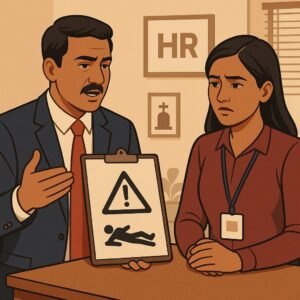
(As per Factories Act, 1948, Karnataka Factories Rules, 1969)
─────────────────────────────────────────────────────────────
⚠️ Introduction
Industrial accidents are the darkest moments in the life of an organisation. They do not just disrupt operations—they break families, shake employee morale, and expose management to severe legal scrutiny.
In the Indian manufacturing ecosystem, especially in Karnataka, a fatal accident is treated with high seriousness because it involves a complex mix of human emotion, statutory obligations, legal liabilities, and ethical responsibilities.
Factories are hazardous environments. Machinery, chemicals, high-pressure systems, elevated workspaces, and electrical equipment are continuously in motion. Even when employers implement preventive controls, use PPE, and conduct training, accidents can still occur due to human error, unforeseen events, or system-level failures. The true professionalism of HR and management is tested not when everything is safe — but when something goes terribly wrong.
Every minute after a fatal accident matters. Every decision you make will be judged by the law, by the regulators, by the courts, and most importantly, by the family of the deceased worker.
In Karnataka, failing to follow the correct procedure can lead to criminal prosecution, regulatory penalties, FIR against the Occupier and Factory Manager, and even jail time.
That is why this guide is not just academic — it is a survival handbook for HR heads, plant managers, safety officers, and industry leaders.
Read: Step-by-Step Guide for Handling ESIC Accidents in India-2025
─────────────────────────────────────────────────────────────
1. Why HR Must Understand This
When a fatal accident occurs in a factory, it is not only a humanitarian crisis but also a highly regulated legal event. Incorrect reporting or delays do not just attract fines—they can lead to criminal prosecution of the Occupier and Factory Manager.
HR professionals often assume that industrial safety is the responsibility of the EHS or Safety Department. This is a dangerous misconception. The law does not view accidents as “departmental incidents.” It sees them as institutional failures. Therefore, responsibility sits at the highest levels:
- Occupier
- Factory Manager
- HR Head / Site HR
- Safety Officer
Your actions decide:
- Whether the deceased worker’s family gets financial protection promptly
- Whether the company becomes a case study in compliance — or negligence
One mistake many factories make is delaying communication, hoping the worker’s condition “improves” or “clarifies.” This hesitation can destroy the legal standing of the company.
─────────────────────────────────────────────────────────────
2. Reportable vs Non-Reportable Accidents
2.1 What Accidents Are Reportable
Under Section 88 of the Factories Act, 1948: A factory must report to authorities when an accident:
- Causes death, or
- Prevents the injured worker from working for 48 hours or more immediately after the accident.
These are legally Reportable Accidents. 👉 Even if the person dies later in hospital, HR must treat the accident as reportable.
A very common mistake occurs when an injured worker is hospitalized and dies a few days later. Some HR departments assume this is a “medical death” because it did not happen immediately at the factory. That is wrong. The law looks at cause of death and origin of injury, not the time gap.
Example: A worker gets crushed by a stamping machine, undergoes surgery, remains on ventilator, and dies after 5 days. The accident is still reportable as a fatal accident.
─────────────────────────────────────────────────────────────
2.2 Additional Reporting Requirements Under Karnataka Rules
Rule 130 of the Karnataka Factories Rules, 1969 mandates that when an accident results in death, it must be reported to:
- The District Magistrate
- The Officer-in-charge of the nearest police station
- The relatives of the injured or deceased person
⚠️ This obligation exists in addition to reporting to the Directorate of Factories. This is important because many HR teams only notify the Factory Inspector or upload an accident report through the online portal. That is incomplete.
In Karnataka, fatal accident reporting is a multi-authority obligation. And yes — notifying the family is a legal requirement, not merely a social courtesy.
─────────────────────────────────────────────────────────────
2.3 Non-Reportable Accidents (Interpretation for HR)
Non-Reportable accidents are events that:
- Do not lead to death
- Do not cause 48+ hour disablement
- Require first aid only
- Cause minor bruises or cuts
- Do not involve occupational disease
⚠️ Even if non-reportable, HR must:
- Record in the First Aid register
- Conduct incident investigation
- Update risk controls
Small injuries ignored today become serious risks tomorrow.
Read: Factory Act HR Registers & Forms 2025: Karnataka Compliance Guide.
─────────────────────────────────────────────────────────────
3. Mandatory Legal Reporting in Karnataka
3.1 Section 88 of Factories Act
Section 88 places responsibility on the Factory Manager to report fatal and severe accidents to:
- Director of Factories (through State Directorate)
- “Prescribed authorities” as per state rules
Karnataka has expanded this obligation through Rule 130. Many management teams think their responsibility ends once they email the Inspectorate or log the event online. However, Section 88 is only the central framework. The Karnataka Rules add mandatory reporting to police, magistrate, and family.
─────────────────────────────────────────────────────────────
3.2 Karnataka Factories Rules, 1969 — Rule 130
Rule 130 specifically states that in fatal accidents, management must notify:
- District Magistrate
- Officer-in-charge of nearest police station
- Family (relatives) of the deceased
This is extremely important because many HR teams only inform the Factory Inspector, which is incomplete and can be penalised. Reporting to the family is not merely sending a phone call or WhatsApp message. It should be done respectfully, professionally, and ideally personally by senior HR or management.
─────────────────────────────────────────────────────────────
4. What Happens After a Death — Parallel Proceedings
4.1 Police Investigation and Factory Inspectorate
In cases of fatality:
- Police may register FIR under Section 304A IPC (death due to negligence)
- Directorate of Factories investigates under Section 92 of Factories Act, which is a special law
Both processes can run in parallel, which causes confusion. This shocks many HR departments: “But this is a factory matter, why is criminal law applied?” Because causing death by negligence is a punishable offence, irrespective of industry. Until legal sections are evaluated, police are allowed to act.
─────────────────────────────────────────────────────────────
5. Police SOP (Very Important for HR)
The uploaded circular sets the Standard Operating Procedure (SOP) for police.
5.1 Summary for HR
- Police should register FIR based on the complaint received about death in a factory.
- Conduct Post-Mortem as per BNSS provisions.
- Verify if the factory is registered under Factories Act.
- If factory is registered and the allegations fall under Section 92 of Factories Act, → IO shall send report to Factories Inspector and file “mistake-of-fact” report to court, enclosing Inspector’s complaint.
- If factory not registered, or allegations not covered under Section 92, → Police shall complete investigation and submit final report to court.
This SOP aligns police actions with special law precedence over general IPC.
Read: Standing Orders Act Compliance 2025: HR Guide to Avoid Fines & Disputes.
─────────────────────────────────────────────────────────────
6. Why This Matters — Special Law vs General Law
The Karnataka High Court has clearly held:
- Factories Act is a special legislation
- It overrides IPC prosecution to prevent double jeopardy
- Factories Act proceedings take priority
This is based on judgments including:
- Criminal Petition 5115/2014 (28.05.2019)
- Criminal Petition 7964/2016 (02.01.2023)
This means Section 92 proceedings can supersede criminal negligence charges unless exceptional circumstances exist.
─────────────────────────────────────────────────────────────
7. Sections You MUST Know
7.1 Section 88 – Factories Act, 1948
Accident reporting:
- Death, or
- Injury causing > 48 hours inability to work
7.2 Rule 130 – Karnataka Factories Rules, 1969
Fatal accidents → Notify:
- District Magistrate
- Police Station In-Charge
- Relatives of victim
7.3 Section 92 – Factories Act
General penalty for offences:
- Contraventions including safety violations
- Punishable with imprisonment up to 2 years or fine up to ₹1 lakh
- Enhanced penalties for death/serious bodily injury
7.4 Section 304A IPC (Now Section 106 of BNS)
Causing death by negligence — FIR basis (subject to SOP).
─────────────────────────────────────────────────────────────
8. Practical HR Actionables
8.1 When Accident Happens
- Provide emergency treatment & shift to hospital.
- Preserve accident scene.
- Report immediately to Factories Directorate.
- Notify District Magistrate, Police, Family.
- Cooperate with post-mortem & legal processes.
- Initiate internal RCA & CAPA.
─────────────────────────────────────────────────────────────
10. Intimation to ESIC in Case of Death
If the deceased employee was an ESIC-covered Insured Person (IP), ESIC death intimation should be done immediately. This is not only a compliance process—it is essential to ensure that the employee’s dependents receive benefits without delay.
10.1 Who should inform?
- Ideally: Employer / HR
- Practically: Hospital or employee family may also inform, but the employer’s intimation carries maximum weight for smooth claims.
10.2 What to submit to ESIC
- IP number and Aadhaar
- Accident/incident report
- Employer accident register entry
- Death certificate (not mandatory at initial stage if hospitalized case)
- Bank and identity details of nominee
💡 Send intimation via ESIC portal immediately after hospital confirmation or death notification.
10.3 Why immediate intimation matters
- Faster Dependent Benefit (DB) claim
- Quicker IP eligibility verification
- Prevention of fraudulent withdrawals
- Release of funeral expenses
─────────────────────────────────────────────────────────────
11. Can Police Override and File FIR on the Occupier?
This is the most common legal fear in HR. Yes — Police can register an FIR. Police have the power to register an FIR for death in a factory based on the complaint or report they receive. This includes offences such as Section 304A IPC (now Section 106 BNS), i.e., negligence causing death.
11.1 The legal limit
👉 Once it is established that the accident occurred in a registered factory, and the allegations fall within Section 92 of the Factories Act, the Factories Act takes precedence.
─────────────────────────────────────────────────────────────
12. What Happens in Practice — as per Karnataka SOP
Below is a legally grounded and practical explanation of the section, written clearly for HR and factory managers in India—especially Karnataka.
What Happens in Practice — as per Karnataka Police SOP (Explained in Legal Terms)
- Police receive complaint → SHO registers FIR When a death occurs inside a factory, the police are legally obligated to treat it as an “unnatural death.” At this stage, police do not evaluate whether the offence falls under Factories Act or IPC—they only register a case based on the allegations in the complaint. Legal reason: Under criminal procedural law, once a cognizable offence is reported, the Station House Officer (SHO) must register an FIR. The FIR is not an indictment—it is simply a starting point of investigation.
👉 The FIR is procedural, not a judgment of guilt.
- Investigating Officer (IO) must check if the factory is registered under Factories Act
After FIR is registered, legal scrutiny begins. The IO has to determine:
- Whether the factory where the incident happened is legally registered under the Factories Act, 1948.
- Whether the nature of the accident arises from “manufacturing process” or within factory premises.
- Whether there are already provisions in Factories Act that cover the violations.
This step matters because Factories Act is a special law specifically designed to regulate industrial safety.
Legal Principle: Special Law prevails over General Law (Doctrine of generalia specialibus non derogant)
Meaning: If a safety failure happens in a registered factory, and the Factories Act already provides a penalty mechanism, IPC/BNS should not be used to prosecute the same breach.
1. If factory is registered & claims fall under Section 92 → Report to Factory Inspector + Mistake-of-Fact closure in court
Section 92 of the Factories Act is the “general penalty section” for safety violations by factory management. If the IO concludes that:
- The factory is legally registered, and
- The violations alleged in the FIR (negligence, safety failure, improper SOPs, lack of guards, PPE, etc.) are already covered under Section 92,
Then, criminal prosecution under IPC must not continue.
Instead, the IO:
- Sends the case file to the Factory Inspector (Directorate of Factories).
- Files a “Mistake-of-Fact” (MOF) final report before the Magistrate.
This is a legal mechanism where police essentially say: “The alleged offence is governed by another special statute, therefore police investigation is unnecessary.”
After this:
- Police step away from prosecution, and
- Factories Act enforcement takes over.
Penalty then proceeds under Section 92, not Section 304A IPC or Section 106 BNS.
2. If the factory is NOT registered or claims exceed Section 92 → Police continues investigation
Where the Factories Act does not apply, police retain jurisdiction.
Examples:
- A manufacturing unit operating without factory registration
- The accident happened outside a notified “factory”
- Death was caused intentionally (assault, criminal conspiracy, etc.)
- Allegations include gross negligence beyond the scope of Section 92
- Sabotage, wilful omission, deliberate disabling of safety controls
- Locking exits, blocking emergency doors, or extreme reckless conduct
In these cases, the police:
- Continue detailed investigation
- Collect technical evidence
- Record witness statements
- File a charge sheet before the criminal court
The offence now proceeds under IPC/BNS, not the Factories Act.
- Police were routinely filing FIRs against Occupiers and Managers under IPC
- Directorate of Factories was filing separate prosecution under Section 92
- Both criminal processes ran parallel
- This resulted in double jeopardy, which is unconstitutional
High Court made this clear: You cannot punish the same act under both IPC and Factories Act if the Act already has penalty provisions. This principle protects industries from criminalizing every industrial accident, while still holding management accountable under special industrial law.
📌 HR Summary in One Line 👉 If the accident is covered by Section 92 in a registered factory, IPC/BNS should not be used — the Factories Act takes over.
─────────────────────────────────────────────────────────────
13. Practical Guidance for HR: When Police Files FIR Against Occupier
13.1 Step 1: Do not argue on the spot
Police are performing their statutory duty. The FIR only means investigation begins, not guilt.
13.2 Step 2: Immediately provide documents
- Factory registration
- Accident register
- Safety training records
- SOPs / JSA
- PPE issuance logs
- Maintenance records Your goal: establish that this is a compliance matter under Factories Act.
13.3 Step 3: Politely cite the SOP and precedents
- Factories Act takes precedence
- Section 92 → Factory Inspector jurisdiction
13.4 Step 4: Engage the Directorate of Factories
Inspector’s complaint is critical for closure of FIR.
13.5 Step 5: Occupier should not personally negotiate
All communications must be through:
- Company legal counsel, or
- Senior HR / compliance officer Never casually discuss “fault”, “negligence”, or “who caused the accident”.
─────────────────────────────────────────────────────────────
14. What NOT to do (from 20+ years of HR experience)
❌ Do not try to “settle” with family immediately. When a worker dies, the family is emotionally disturbed and any attempt at compensation discussion looks like hush money. It can also later be used as legal evidence against the company, suggesting admission of guilt. The correct approach is to show empathy, explain statutory benefits clearly, and follow legal compensation procedures. Let emotions settle before any financial paperwork is handled.
❌ Do not clean accident site before inspection. Cleaning, dismantling, or resetting machines destroys crucial evidence about what caused the accident. Factory Inspectors, police, and safety investigators must see the scene as it was at the moment of the incident. Tampering with it can be treated as obstruction of investigation. Preserve the spot unless intervention is required to save someone’s life.
❌ Do not pressure co-workers to give scripted statements. Forcing or coaching employees to say “what management wants” can easily backfire legally. Investigators cross-check CCTV, logs, training records, and witness testimonies—contradictions destroy your credibility. Encourage truthful accounts without fear or influence. Your role is to facilitate transparency, not manufacture a story.
❌ Do not blame worker in police statements. Saying “he was careless” or “he didn’t use PPE” is legally dangerous because it shifts negligence onto the victim without proof. Investigations focus on systemic failure—training gaps, machine safety, maintenance, SOPs—not individual mistakes alone. Such statements anger authorities and families and may be treated as victim blaming. Always stick to facts, not assumptions.
❌ Do not send junior HR interns to handle police. Police inquiries involve legal interpretation, accountability, and sensitive communications. Sending a junior HR associate shows lack of seriousness and exposes the company to mistakes in statements or commitments. Always assign a senior HR, Factory Manager, or legal counsel to speak with authorities. This ensures professionalism and reduces legal risk.
These mistakes escalate cases into criminal negligence.
─────────────────────────────────────────────────────────────
15. Golden Rule
👉 Treat every fatal accident as both legal and human. Compliance, compassion, and speed must work together.
What this means in practice
A fatal accident is not just a safety incident. It is a mix of law, emotion, responsibility, and trust. You cannot handle it only as a legal problem, and you cannot handle it only with sympathy. Both sides must move together at the same time.
Example 1: Compliance without compassion (Wrong approach)
A worker dies in a machine accident. HR immediately prepares forms, sends notification to authorities, and uploads the accident report. But no one visits the family, no one assists with hospital handover, and no one explains benefits. Legally the company did the minimum—but socially it becomes a torture for the family, and employees will remember the company as heartless.
Example 2: Compassion without compliance (Also wrong)
A worker dies and HR rushes to the family, pays ₹2–3 lakh “on humanitarian grounds,” and arranges funeral expenses. However, they delay reporting to the Factory Inspector, do not inform the District Magistrate, and the police learn about the death through rumor. The family is initially grateful, but weeks later, authorities file cases, FIR is registered, and management faces prosecution—because law does not forgive emotional handling.
Example 3: Human + Legal (Correct approach)
Worker meets with a fatal accident on shift. HR immediately calls ambulance, informs safety and plant heads, and preserves the accident scene. Hospital formalities are supported, family is informed respectfully, and statutory notifications are issued within hours. The company communicates benefits clearly, offers counseling to co-workers, and cooperates honestly with inspectors. This approach balances law, dignity, and trust—and protects the company long-term.
Why “Legal + Human” must run together
- If you only follow law: You look cold, uncaring, and hostile. Morale collapses, families turn hostile, unions mobilize.
- If you only show sympathy: You risk FIRs, prosecution, and accusations of hiding evidence or negligence.
- If you combine both: You protect the family, protect the company, and protect yourself as HR.
One simple mantra for HR In the first 24 hours after a fatal accident, your job is not to defend the company, your job is to do the right thing—legally and humanely.
When HR respects both laws and emotions, factories recover faster, teams trust leadership, and tragedies do not become scandals.
─────────────────────────────────────────────────────────────
Conclusion
A worker’s life cannot be brought back, but how your organisation responds determines whether the family receives dignity—or just paperwork. In Karnataka, the strongest HR departments are not those that know the law, but those that are prepared to use it responsibly. Train your teams, document everything, and keep your ethics higher than your SOPs.



Insightful. Detailed one..very useful. Great work…